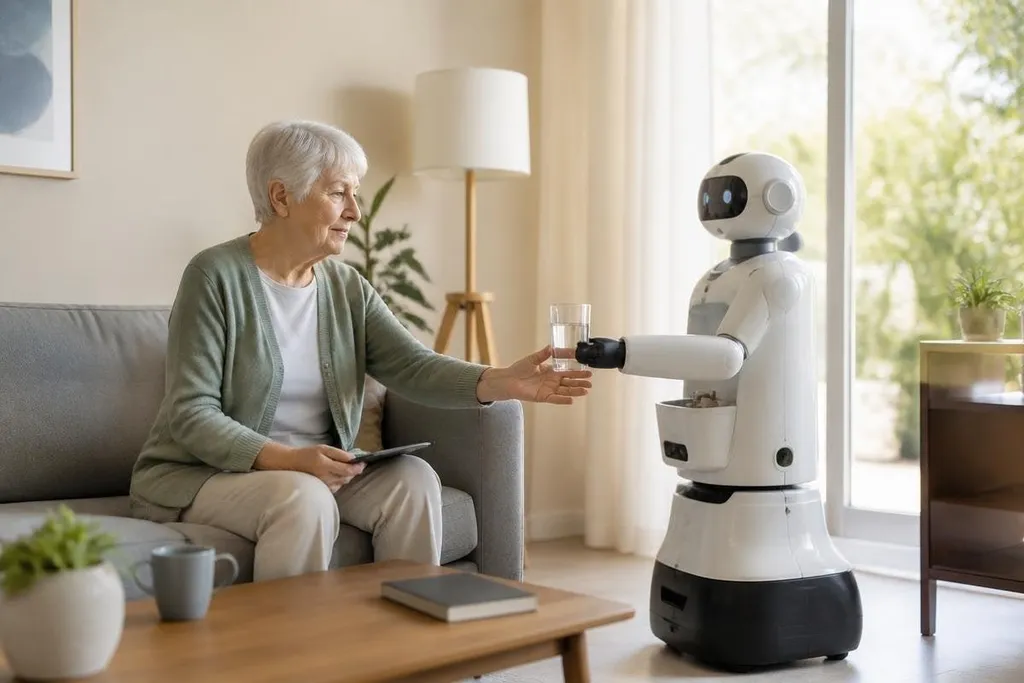
A caregiving robot may help with a narrow task such as carrying an item, reminding someone about medicine, or calling for help after a fall. Independent living will depend on how well those tasks work inside a real home, where rooms, routines, and needs change from person to person.
- The useful test is the task, not the robot’s shape.
- A person must be able to stop, correct, and understand the system.
- Remote help may matter as much as onboard automation.
Start with tasks people repeat
A robot can support independent living when it reduces a task that is tiring, risky, or hard to repeat. Carrying laundry between rooms, bringing a bottle of water, opening a drawer, and picking up an object from the floor are clear examples.
Each task needs a different mix of hardware. A mobile robot needs wheels or legs, obstacle sensors, and a way to build a map of the home. An arm needs joints, torque control, and a gripper that can hold an object without crushing it.
That distinction matters because a robot that moves well may still fail at the handoff. A gripper must find the object, hold it at the right angle, and place it where the person can reach it.
A smooth demo does not prove that the same action will work with a wet cup or a blanket on the floor.
Safety starts with control
A person using a home robot needs clear control over every action. Voice commands can help, but the system should also have a physical stop button and a way to cancel a task when speech recognition gets a word wrong.
Sensors can detect people, furniture, and open doors. LiDAR measures distance with laser pulses, while cameras help the robot identify objects. These tools can reduce collisions, yet they do not remove the need for careful testing around pets, visitors, loose cables, and narrow doorways.
The robot also needs to explain what it is doing. A light, sound, screen message, or spoken prompt can show that it heard a request, found an item, or stopped because the path was blocked. That feedback gives the person a chance to correct the system before a small error becomes a safety problem.
Human help still has a place
Many home tasks will remain too varied for full automation. A robot may reach a kitchen, find a cup, and then need help when the cup is inside a crowded cabinet. Remote teleoperation can let a trained person guide the robot through that moment.
This approach changes the job rather than removing it. The remote operator needs a clear video feed, safe control limits, and a record of what happened. The person at home needs to know when outside help has connected and what information the system has sent.
A home-care robot’s promise needs a named machine, test setting, and date behind it. Robot24.com home-care reporting can give you those details before you judge what the system may record inside a home.
Privacy needs the same care as physical safety. Cameras and microphones may record private parts of a home, so the system should show when sensing is active, limit who can view the data, and give the resident a way to delete recordings.
What remains unproven
The hardest question is not whether a robot can perform one action in a controlled room. It is whether the action remains useful after weeks of ordinary use, when furniture moves, batteries need charging, and the person’s routine changes.
There is also a cost question. A home system may need the robot, charging equipment, software support, repairs, and a human service for tasks it cannot finish alone. A low purchase price would not make the system affordable if support fees or repairs are high.
I’d judge a caregiving robot by the number of tasks it completes safely without making the person change their life around it.
A practical buying check
Before choosing a system, ask:
- Which exact task does it perform, and how often does that task occur?
- Can the person stop it with a physical control?
- What happens when the robot cannot identify an object or reach a room?
- Who receives alerts, and how quickly can they respond?
- What cameras, microphones, or location data does it collect?
- What do repairs, software support, and remote help cost?
A useful home robot should leave the resident with more control, not another system to manage. The next proof to look for is sustained use in ordinary homes, with clear records of failed tasks, safety stops, repair calls, and the work still done by people.